
Energy Security Compacts go from concept to Congress
Woop!

It feels very weird to “celebrate” anything related to U.S. policy right now. Things are dark.
But sometimes disruption creates opportunities to do something new. So despite all the things going on that make me want to scream, today I’m celebrating my team’s role in shaping a proposal that’s ambitious, bipartisan, and… (gasp)...good for development??
Bipartisan legislation proposes the Hub’s ‘Energy Security Compacts’
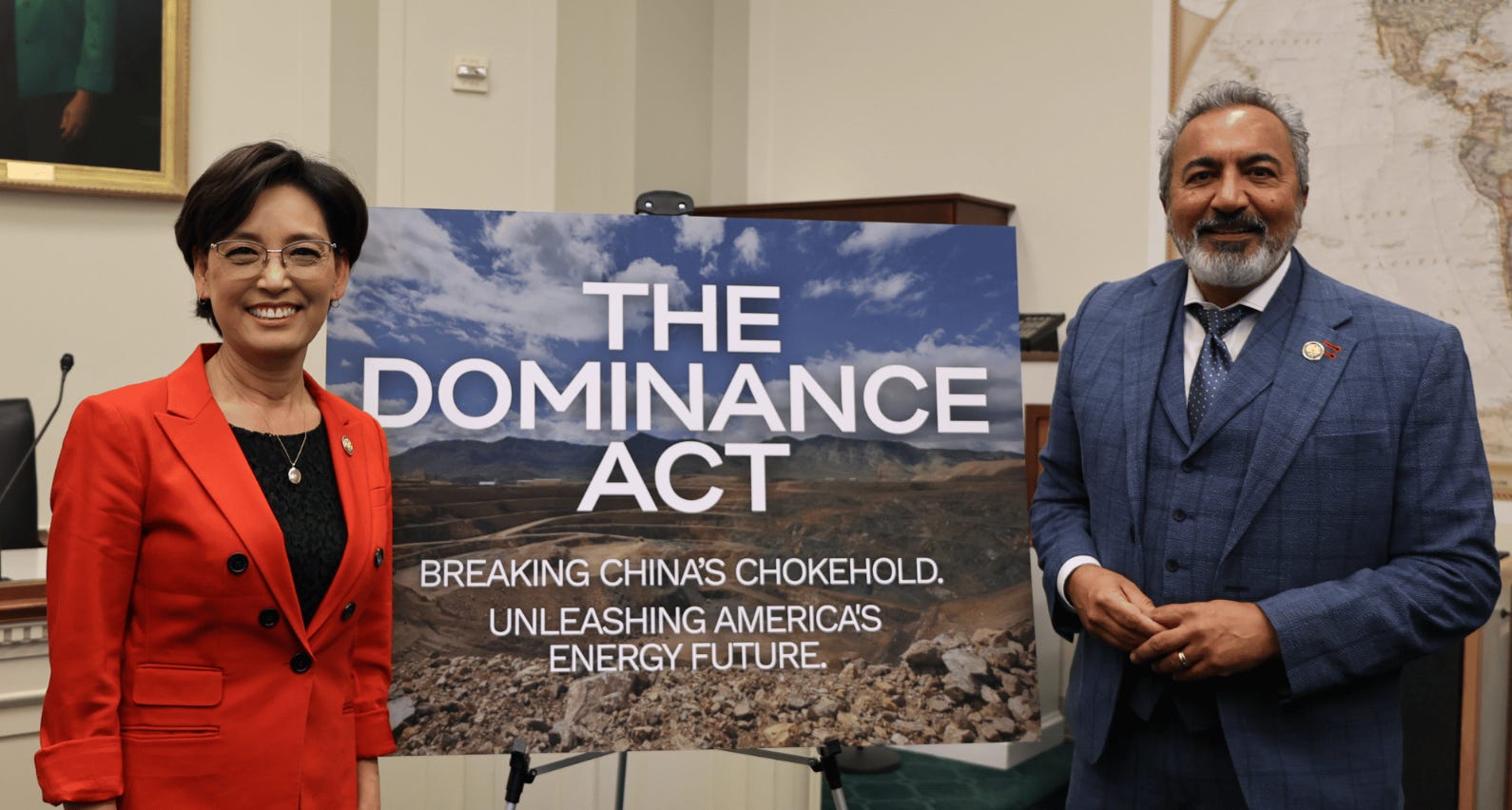
On Tuesday, Representatives Young Kim and Ami Bera introduced a bipartisan bill to strengthen and diversify the critical mineral supply chains we depend on for electronics, energy technology, and defense. One of the legislation’s core planks is Energy Security Compacts, a concept the Energy for Growth Hub first proposed more than two years ago and has been working to refine with ClearPath and a diverse coalition of allies ever since.
An Energy Security Compact is a 5-to-10-year bilateral agreement between the U.S. and an allied country, delivering a coherent package of investment and support to address that country’s energy security constraints, whether related to supply, cost, or reliability.
What are Energy Security Compacts doing in a bill about minerals?
Energy Security Compacts are premised on the idea that investing in energy solutions in emerging and lower-income economies is not simply about “development” – it’s also directly and explicitly in the U.S. self-interest.
One clear example is countries that are mineral-rich but energy-poor. To reduce dependence on Chinese supply chains and strengthen its own energy security, the U.S. wants allied countries to expand mining and minerals processing. But many of them lack sufficiently abundant, reliable, or affordable energy to do so.
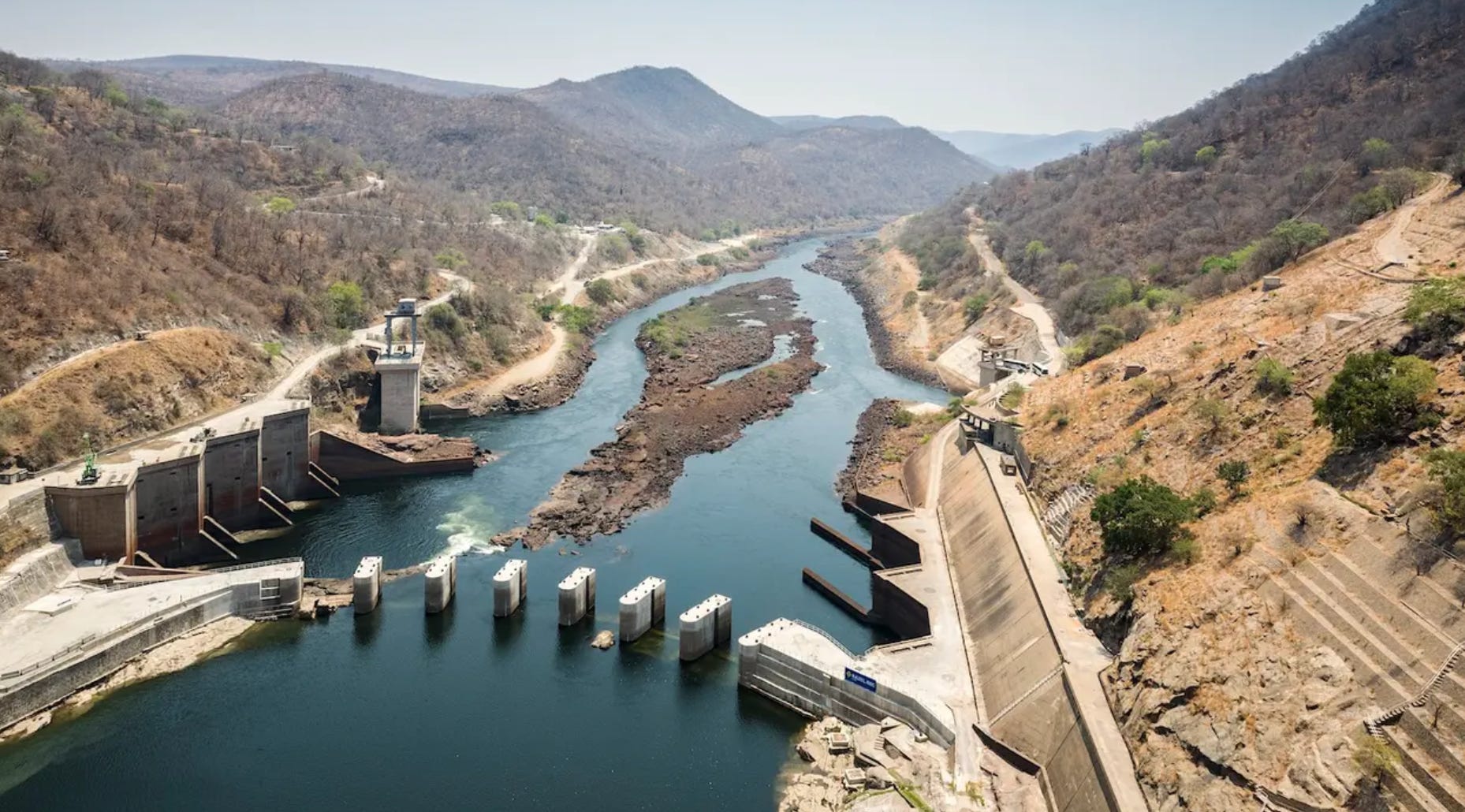
Take Zambia, one of the world’s largest copper producers. Last year, chronic power shortages forced the government to ask mining companies to cut power consumption by 40%, and/or find new sources of electricity at significant additional cost. Mozambique, Africa’s second-largest aluminum producer, faces an electricity shortfall this year that could cut production by 30%. And when the mining sector struggles in these countries, so do their broader economies: the industry accounts for about 12% of Zambia’s GDP and 70% of its foreign exchange earnings.
Making transformational investments in the energy systems of these countries would be good for them — and for us.
Articulating the U.S. self-interest so explicitly makes some traditional development advocates uncomfortable. I get that. But development assistance has always been at least partly about our own national interests. I think we should own up to that, and use it to build a broader, more durable coalition for doing impactful work.
How would Energy Security Compacts work?
Energy Security Compacts wouldn’t be limited to mineral-rich countries. There are plenty of other examples in which investing in the energy security of an ally advances U.S. interests:
Helping reduce dependence on Russia or China for energy supply or investment
Opening the world’s fastest-growing markets to US energy technology
Securing energy infrastructure under direct military threat
Powering economic growth that makes an ally more stable and less reliant on assistance
We designed the idea to try and fix three things that have plagued previous U.S. energy investment efforts.
First, it starts with a constraints analysis, enabling the U.S. and its partners to identify the biggest barriers to energy security and then make investments with the biggest payoffs. This approach, modeled on the Millennium Challenge Corporation, recognizes the energy system for what it is: a system that can’t be fixed through a series of disjointed, stand-alone projects. It starts with a plan for new investment, rather than setting an ambitious goal and then scrambling to figure out which existing U.S. efforts can be counted towards it.
Second, it incentivizes collaboration across all the U.S. agencies that have tools and resources to contribute. It creates a sort of quarterback to drive coordination, with a pool of flexible funding to distribute across the government to incentivize creativity and enable agencies to tackle problems outside the strictures of the annual budget cycle.
Third, it aligns MCC’s precious grant capital with our investment agencies. MCC is the only U.S. agency with grant funding to build out crucial public energy infrastructure, like electric grids. The flexibility of this funding is precious. Historically, MCC has operated largely separate from the rest of the interagency. Energy Security Compacts would change that: working explicitly to align MCC’s investments with a broader goal and using its grant funding to create follow-on investment opportunities for the Development Finance Corporation and others.
What now?
We have a long way to go before this (potentially) becomes law. And the text will likely change many times along the way.
There are three big things we’ll be fighting for during that process:
The Millennium Challenge Corporation has to be central. Currently, the draft legislation doesn’t emphasize MCC. But MCC’s grant capital is the special sauce in many lower-income markets. Too many times, the U.S. has made the mistake of announcing big commitments to our allies and then failing to bring any real resources to the table. We can’t do that again. Energy Security Compacts should make MCC’s programs the anchor of a broader USG investment portfolio. The agency has more than twenty years of experience building energy infrastructure in emerging economies–something no other agency can claim.
Investment in energy-for-development must remain the core objective. Securing mineral supply chains is an important goal. But the Energy Security Compacts piece is more broadly about investing with our allies in energy security: in energy reliability, affordability, and supply. We can’t let the energy component get subsumed in the policy and media focus on minerals.
This only works in the context of real partnership. Energy Security Compacts are long-term commitments by the U.S. and its partner countries, setting up 5-10 year agreements that would outlast any single administration. I’m not naive: I have eyes and ears and read the news. International partnerships are not exactly in vogue inside this White House–and trust in our credibility is … low. This administration’s actions and rhetoric on Venezuela and Greenland have countries understandably unnerved about our intentions when it comes to natural resources. Energy Security Compacts are a framework to start rebuilding that trust: but they only work in a context where the U.S. commits to true partnerships, not naked bids for resource extraction and control.
Thanks to our core allies who helped get the idea this far, including ClearPath, Rocky Mountain Institute, the Climate Leadership Council, Third Way, and the American Federation of Scientists. Working with a diverse coalition of smart, pragmatic, ideologically diverse partners is still the way to get things done… even in the midst of chaos.
Such an exciting development!! And the bipartisan nature of it is inspiring right now. Putting a clear focus onto the proven MCC model is genius. Can’t wait to track the progress! Bravo to you and the team!
Excellent forward thinking approach. Normally the Congress would be the biggest obstacle to realizing this vision. But thanks to the current administration's "America First and Only" approach, I suspect many potential partners will be more than skeptical of our intentions.